
ACL Ligament Tear
The ACL, or anterior cruciate ligament, is one of the four major ligaments that stabilise the knee. When it tears, you usually know immediately. There is often a loud pop, the knee gives way, and swelling develops within hours. For athletes and active individuals, an ACL injury is one of the most significant setbacks they will face. For everyone else, it is a sudden and serious disruption to daily movement and quality of life. ACL ligament tear treatment in Noida at Power Physio Clinic is built around one standard: returning you to full function with a knee that is genuinely stable, strong and ready for whatever you ask of it. That process takes time, clinical precision and a rehabilitation programme that does not cut corners.
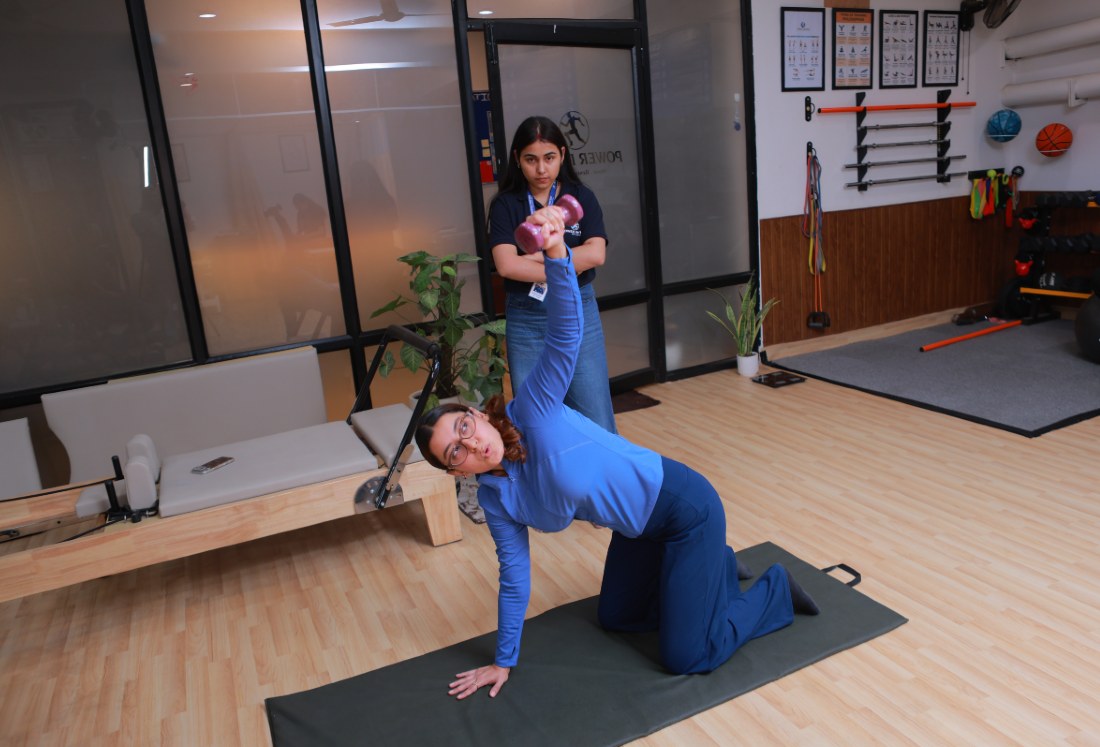
Physiotherapy plays a vital role in ACL rehabilitation, focusing on reducing pain, swelling, and instability while restoring knee function and preventing further injury. At Power Physio Clinic, we excel in ACL rehab through a comprehensive approach tailored to each patient's needs. Our protocols include initial assessment to determine injury severity, followed by personalized treatment plans that integrate manual therapy, progressive exercise programs, and biomechanical correction. We emphasize functional rehabilitation to facilitate safe return to sports and daily activities, guided by evidence-based practices and continuous patient education.
Symptoms of ACL Ligament Tear
- Pain: Sudden and severe pain at the time of injury
- Swelling around the knee joint
- Bruising
- Instability: Feeling of knee giving way
- Limited Range of Motion

What Is an ACL Tear?
The anterior cruciate ligament runs diagonally through the centre of the knee, connecting the femur to the tibia and controlling rotational stability and forward movement of the shin bone. ACL tears most commonly occur during:
- Sudden deceleration followed by a change of direction
- Pivoting or twisting with the foot planted
- Landing awkwardly from a jump
- Direct contact to the knee during sport
- Hyperextension of the knee beyond its normal range
ACL injuries are classified by severity. A partial tear involves damage to a portion of the ligament fibres while the knee retains some stability. An ACL ligament complete tear is a full rupture, where the ligament is torn through entirely, and the knee loses its primary rotational stabiliser.
Symptoms of an ACL Tear
ACL ligament tear symptoms are usually difficult to miss at the time of injury but can be confused with other knee injuries in the days that follow. Key symptoms include:
- A popping sound or sensation at the moment of injury
- Immediate swelling of the knee, typically within one to two hours
- Pain that ranges from moderate to severe, depending on associated damage
- A feeling of instability or that the knee cannot be trusted during movement
- Difficulty bearing full weight through the leg
- Loss of full range of movement, particularly into full extension
An accurate clinical assessment is essential because ACL tears frequently occur alongside meniscus damage, MCL injury or bone bruising, all of which affect the treatment plan.
ACL Ligament Tear: Surgery vs Without Surgery
|
Factor |
With Surgery |
Without Surgery |
|
Grade of Tear |
Complete tear, high-demand athlete |
Partial tear, lower activity level |
|
Knee Stability |
Reconstruction restores mechanical stability |
Physiotherapy rebuilds dynamic stability |
|
Recovery Time |
9 to 12 months with full rehabilitation |
3 to 6 months, depending on severity |
|
Return to Sport |
Full return to pivoting and contact sport |
Sport-specific assessment required |
|
Treatment Approach |
Surgery followed by ACL ligament tear physiotherapy treatment |
ACL ligament tear treatment without surgery via structured physio |
The decision between surgical and non-surgical management depends on the grade of the tear, your age, activity level, knee stability and the presence of associated injuries. At Power Physio, we work closely with orthopaedic surgeons across Noida to ensure every patient receives the right recommendation for their specific situation.
ACL Ligament Tear Treatment Without Surgery: When Is It Appropriate?
Not every ACL injury requires reconstruction. ACL ligament tear treatment without surgery is appropriate in several situations:
- Partial ACL tears where the knee remains functionally stable
- Older or less active patients whose daily demands do not include pivoting or cutting movements
- Patients who are medically unsuitable for surgery
- Athletes in certain sports where rotational demands are lower
In these cases, ACL ligament tear physiotherapy treatment focuses on rebuilding the dynamic stability of the knee through progressive quadriceps, hamstring and gluteal strengthening, neuromuscular training and sport-specific rehabilitation. Many patients managed non-surgically return to full activity with a knee that functions reliably within normal daily and recreational demands.
ACL Ligament Tear Treatment in Noida: The Rehabilitation Process
Whether you have had surgery or are managing the injury without it, structured ACL ligament tear physiotherapy determines the quality of your recovery. The process follows clear phases, and progression through each phase is based on objective criteria rather than calendar weeks.
1. Acute Phase: Protecting the Knee and Reducing Swelling
In the days immediately following the injury or surgery, the priority is pain management, control of swelling, and protection of the knee from further stress. Gentle range-of-motion exercises begin almost immediately to prevent stiffness and maintain circulation without loading the healing tissue.
2. Early Rehabilitation: Restoring Movement and Basic Strength
Once swelling is adequately controlled, ACL ligament tear physiotherapy treatment introduces progressive exercises to restore the full range of motion and begin rebuilding the quadriceps and hamstring strength that the knee depends on for stability. Quadriceps activation is often significantly impaired following ACL injury and requires specific attention before loading can progress.
3. Strength Phase: Rebuilding Knee and Lower Limb Capacity
This is the longest and most important phase of ACL ligament tear recovery. Structured strengthening of the quadriceps, hamstrings, glutes and calf muscles progressively rebuilds the muscular support system around the knee. Exercises advance from open-chain movements to closed-chain loading, squats, lunges, and step work as the tissue matures and strength improves.
4. Neuromuscular and Proprioceptive Training
An ACL tear disrupts the sensory nerve endings within the ligament that contribute to the knee’s positional awareness. Neuromuscular training restores the knee’s ability to respond automatically to sudden changes in load and direction. This is the phase most often shortened prematurely, and its omission is the primary reason ACL re-injury rates remain high.
5. Sport-Specific Rehabilitation and Return to Play
The final phase of ACL ligament tear recovery introduces running, cutting, jumping and sport-specific movement patterns in a controlled, progressive way. Return to full training and competition is cleared only when objective strength symmetry between both legs reaches the required threshold, typically 90% or above. ACL ligament tear recovery time to this point is nine to twelve months for surgical cases and three to six months for non-surgical management.
ACL Ligament Tear Recovery Time: What to Expect
ACL ligament tear recovery time is one of the most common questions patients ask, and the honest answer depends on several factors:
- Surgical reconstruction followed by full rehabilitation: nine to twelve months
- Non-surgical management of a partial tear: three to six months
- Return to light training and non-contact activity: typically four to six months post-surgery
- Full return to pivoting, cutting and contact sport: nine to twelve months minimum
Patients who attempt to return before objective criteria are met face a significantly elevated risk of re-tearing the graft or injuring the opposite knee. The timeline exists for biological reasons, not administrative ones.
When Should You Seek ACL Ligament Tear Treatment in Noida?
Seek assessment immediately if any of the following apply:
- You heard or felt a pop in the knee during activity
- The knee swelled significantly within hours of the injury
- The knee feels unstable or gives way during walking
- You cannot fully straighten or bend the knee
- A previous knee injury has never fully resolved
- You are an athlete who needs to understand your surgical options and recovery timeline
Finding physiotherapy for ACL tear near me as early as possible following the injury allows for accurate assessment, appropriate referral if surgery is indicated, and immediate commencement of the rehabilitation process that determines your outcome.
How Power Physio Treats ACL Tears in Noida
Led by Dr. Poonam Chaudhary (MPT Ortho), Power Physio Clinic provides structured, evidence-based ACL ligament tear treatment in Noida for patients across all ages and activity levels. Our team has extensive experience managing ACL injuries from the acute phase through to full return to sport, both as a standalone physiotherapy programme and as post-surgical rehabilitation in coordination with orthopaedic surgeons across Noida.
Every patient receives a thorough clinical assessment, a personalised ACL ligament tear physiotherapy treatment plan and objective return-to-sport testing before being cleared for full activity.
We also treat related conditions, including knee pain, ligament tears, sports injuries and overuse injuries that frequently occur alongside or following ACL damage.
Call us on 70113 25292 or visit our contact page to book your ACL assessment at Power Physio today.
Conclusion
An ACL tear is a serious injury, but it is not a permanent one. With the right ACL ligament tear treatment in Noida, a structured rehabilitation programme and a clear understanding of your recovery timeline, most patients return to full activity with a knee that is strong, stable and reliable. Whether you are managing the injury without surgery or recovering from reconstruction, Power Physio is where that recovery is done to the standard it deserves.