Sports Injury Physiotherapy
Sports injuries can stop you in your tracks. Whether it is a sudden injury during a match or an overuse condition that has been quietly building for weeks, the impact on your movement, confidence and daily life is very real.
The good news is that with the right sports injury physiotherapy, most athletes recover fully and return to their sport stronger than before. At Power Physio Clinic in Noida, we make sure that happens properly, without shortcuts and without rushing the process.
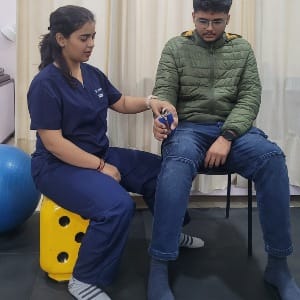
Need to Address Sports Injuries
It's crucial to address sports injuries promptly for several reasons:
- Prevent Further Damage.
- Restore Function.
- Safe Return to Activity.
- Minimize Pain and Discomfort.
Why Should You Address a Sports Injury Immediately?
Many athletes make the mistake of pushing through pain and hoping it settles on its own. Sometimes it does. But more often, delaying treatment turns a manageable injury into a chronic problem.
Addressing a sports injury promptly matters for four clear reasons:
- Prevent Further Damage: Leaving an injury untreated significantly increases the risk of the condition worsening or becoming a long-term issue that is far harder to resolve
- Restore Function: Timely sports injury treatment restores range of motion, rebuilds strength and recovers the agility you need to perform at your level
- Safe Return to Activity: A structured rehabilitation programme reduces the risk of re-injury considerably when you return to training or competition
- Minimise Pain and Discomfort: Early intervention manages pain more effectively and speeds up the overall recovery timeline
What Are the Symptoms of a Sports Injury?
Symptoms vary depending on the type and severity of the injury. Here is what to watch for:
- Pain: Localised pain, sharp discomfort or a dull, persistent ache at or around the injury site
- Swelling and Tenderness: Visible swelling or sensitivity to touch, often developing shortly after the injury occurs
- Limited Range of Motion: Difficulty moving the affected joint or muscle through its full normal range
- Bruising or Discolouration: Visible bruising around the injury site, particularly following acute trauma
- Weakness or Instability: A noticeable reduction in strength or a feeling that the area cannot be relied upon during movement
- Difficulty Bearing Weight: Discomfort or inability to put pressure on the injured area, particularly common in lower limb injuries
If you are experiencing any of these symptoms, seeing a sports injury doctor near me as soon as possible will make a significant difference to your recovery timeline.
Common Sports Injuries Treated at Power Physio
Injury Type | Common Sport | Primary Symptom | Treatment Approach |
ACL Tear | Football, basketball | Knee instability and swelling | Surgery and sports injury physiotherapy |
Rotator Cuff Injury | Cricket, swimming | Shoulder pain and weakness | Manual therapy and progressive loading |
Ankle Sprain | Running, football | Swelling and instability | RICE, mobilisation and strengthening |
Shin Splints | Running, athletics | Pain along the shin bone | Load management and biomechanics correction |
Tennis Elbow | Racquet sports | Outer elbow pain with grip | Soft tissue therapy and exercise |
Hamstring Strain | Sprinting, football | Sudden sharp pain in the back of the thigh | Progressive rehabilitation programme |
What Should the Treatment Approach Be?
Effective sports injury treatment follows a clear and structured process. Rushing any stage of this increases the risk of re-injury significantly.
Step 1: Initial Pain Management
When you come to Power Physio Clinic with a sports injury, the first priority is to stabilise the injury and bring pain under control before active rehabilitation begins.
- Rest, Ice, Compression, Elevation (RICE): Applied immediately to reduce swelling, manage pain and protect injured tissue from further stress
- Pain Relief Modalities: Evidence-based techniques including ultrasound therapy, electrical stimulation and targeted manual therapy to reduce pain and support tissue healing
Step 2: Sports Specific Rehabilitation
Once pain is adequately managed, rehabilitation is built entirely around your sport, injury type, and return-to-activity goals.
- Assessment and Diagnosis: A thorough evaluation of the injury’s extent and nature to inform every subsequent treatment decision
- Customised Rehabilitation Plan: A personalised programme targeting the specific muscles, joints and movement patterns most critical to your sport and recovery
- Progressive Exercises: A carefully graded introduction of strengthening and mobility work designed to rebuild capacity without overloading healing tissue
- Functional Training: Sport-specific activities that replicate the physical demands of your chosen sport to confirm genuine readiness for return to play
- Education and Prevention: Practical guidance on warm-up technique, movement correction and strength training to significantly reduce future injury risk
How Does Sports Injury Physiotherapy Actually Work?
A lot of people assume physiotherapy just means exercises on a mat. The reality is quite different.
Research consistently shows that physiotherapist-led rehabilitation programmes, when individualised to the patient’s sport and injury type, produce significantly better outcomes than generic treatment protocols. At Power Physio, every treatment plan is built around one person: you.
Your sports injury specialist near me at Power Physio will:
- Conduct a thorough physical assessment before recommending anything
- Identify the root cause of the injury, not just the symptoms
- Build a rehabilitation plan specific to your sport and body
- Progress your treatment as your recovery advances
- Clear you for return to sport only when you are genuinely ready
This approach ensures you return to activity safely, confidently and with the physical resilience to stay there.
When Should You See a Sports Injury Specialist Near Me?
Do not wait if any of the following apply:
- Pain has not improved after 48 to 72 hours of rest
- There is significant swelling, bruising or deformity
- You cannot bear weight on the injured area
- The joint feels unstable or gives way during movement
- The injury is affecting your training, performance or daily life
- You have had the same injury recur more than once
Seeing a sports injury doctor near me early is always better than waiting. The longer an injury goes unassessed, the more the body adapts around it, creating new problems.
How Power Physio Supports Athletes in Noida
Led by Dr. Poonam Chaudhary (MPT Ortho), Power Physio has a dedicated sports physiotherapy team with experience managing injuries across cricket, football, athletics, swimming, racquet sports and recreational fitness training.
Whether you are a competitive athlete or someone who trains for personal fitness, the standard of care here is the same. We are committed to getting you back to full function safely, completely and with the confidence that your recovery has been done properly.
We also manage conditions closely related to sports injuries, including shoulder pain, knee pain, ACL ligament tears and post surgical rehabilitation.
Call us on 70113 25292 or visit our contact page to book your sports injury assessment today.
Conclusion
Sports injuries are common but they should never be left unmanaged. Understanding your injury, acting quickly and following the right sports injury physiotherapy programme makes the difference between a full recovery and a recurring problem.
If you are looking for a sports injury doctor near me in Noida who truly understands athletes and what they need to get back to their sport, Power Physio is where that level of care begins.