Neurological Physiotherapy: What It Is and How It Can Change Your Life
Living with a neurological condition affects far more than just movement. It touches every part of daily life, from the ability to walk across a room to the confidence to go about a routine independently.
The right neurological assessment physiotherapy can make a profound difference to how much function a person recovers and how well they are able to live. At Power Physio Clinic in Noida, we provide physiotherapy in neurological conditions that is built entirely around the individual and what meaningful recovery looks like for them specifically.
Conditions Treated
Our neurological physiotherapy services address various conditions, including:
- Stroke
- Multiple Sclerosis (MS)
- Parkinson’s Disease
- Spinal Cord Injuries
- Traumatic Brain Injury (TBI)
- Cerebral Palsy
- Peripheral Neuropathy
What Is Neurological Physiotherapy and How Is It Different?
This is one of the most common questions we receive, and it is worth answering properly.
What is neurological physiotherapy? It is a specialised branch of physiotherapy focused on treating conditions affecting the brain, spinal cord, and nervous system. Unlike standard musculoskeletal physiotherapy, it works with the way the nervous system learns, adapts and rebuilds movement patterns over time.
Neurological rehabilitation physiotherapy requires a different clinical framework, different techniques and a much deeper understanding of how the nervous system responds to injury and disease. It is not simply a matter of strengthening muscles. It is about retraining the entire movement system from the ground up.
Conditions Treated With Neurological Physiotherapy Treatment
Neurological physiotherapy treatment at Power Physio addresses a wide range of conditions. If you or someone you care for has been diagnosed with any of the following, specialist physiotherapy can make a measurable difference:
- Stroke: Rehabilitation to restore mobility, strength and coordination after brain injury
- Multiple Sclerosis (MS): Managing fatigue, balance issues and progressive muscle weakness
- Parkinson’s Disease: Improving mobility, balance and functional independence as the condition progresses
- Spinal Cord Injuries: Promoting recovery of function and preventing secondary complications
- Traumatic Brain Injury (TBI): Restoring movement, coordination and cognitive function
- Cerebral Palsy: Improving motor skills and independence in daily activities
- Peripheral Neuropathy: Reducing pain and improving sensation and motor function in the limbs.
Neurological Conditions and What Physiotherapy Targets
| Condition | Primary Challenge | Physiotherapy Focus |
| Stroke | Loss of movement on one side | Mobility, strength and coordination |
| Multiple Sclerosis | Fatigue and balance issues | Energy management and stability |
| Parkinson’s Disease | Rigidity and slow movement | Gait retraining and balance |
| Spinal Cord Injury | Paralysis or weakness | Function recovery and complication prevention |
| Traumatic Brain Injury | Movement and cognition | Motor retraining and functional tasks |
| Cerebral Palsy | Motor control difficulties | Independence in daily activities |
| Peripheral Neuropathy | Pain and sensation loss | Sensation rehabilitation and pain management |
How Does Neurological Assessment Physiotherapy Work?
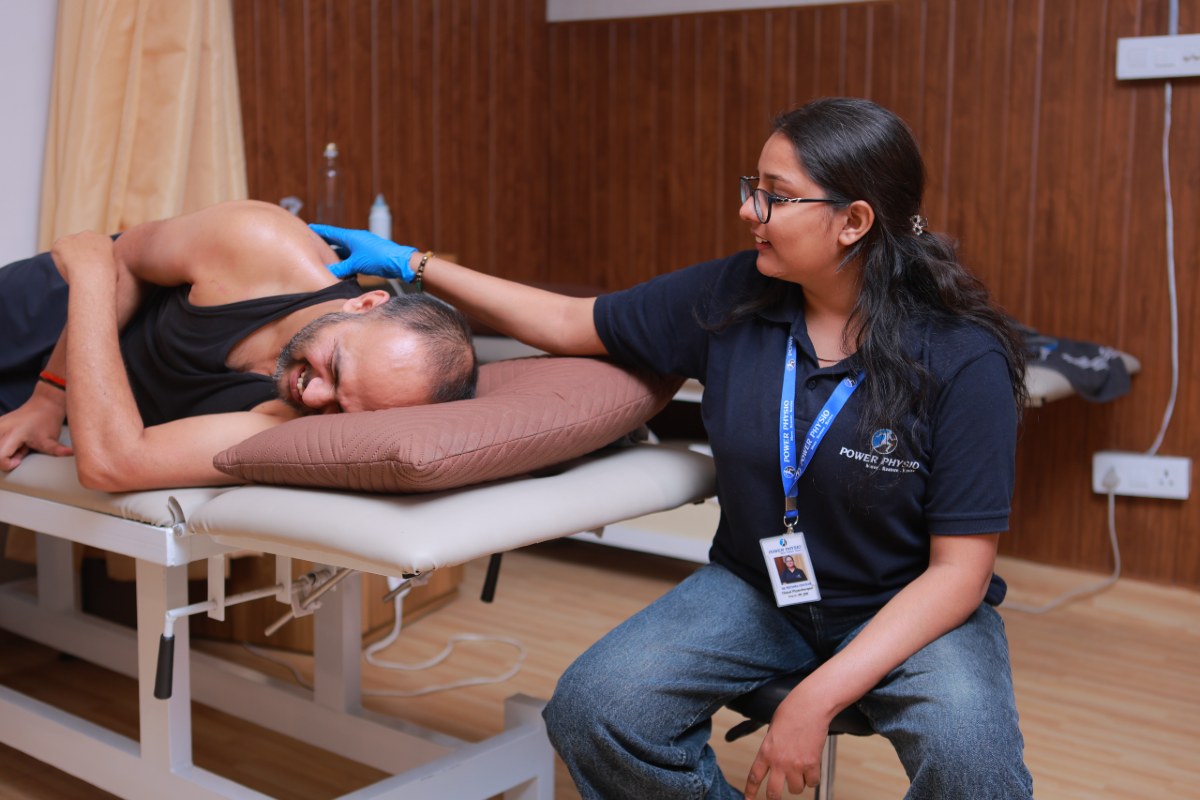
Every case at Power Physio begins with a thorough neurological assessment physiotherapy process before any treatment is recommended.
This assessment evaluates:
- Current functional abilities and movement deficits
- Muscle strength, tone and coordination
- Balance, posture and gait pattern
- Sensation and reflex responses
- The patient’s daily life demands and rehabilitation goals
That foundation shapes the entire treatment plan. Nothing is assumed, and nothing is generic. Every clinical decision that follows is grounded in what that individual assessment reveals.
Short-Term and Long-Term Goals of Neurological Rehabilitation
Research shows that structured neurological rehabilitation physiotherapy with clearly defined goals at every stage produces significantly better outcomes than unstructured recovery.
Short-Term Goals:
- Pain Management: Reducing discomfort and improving tolerance for daily movement and activity
- Improving Mobility: Rebuilding the ability to move and perform essential functional tasks
- Strengthening Muscles: Restoring muscle strength and building sustainable physical endurance
- Enhancing Balance: Reducing fall risk and improving overall postural stability
Long-Term Goals:
- Functional Independence: Maximising the ability to manage daily activities without assistance
- Quality of Life: Improving overall well-being and participation in social and recreational life
- Preventing Complications: Addressing issues such as muscle contractures and pressure sores before they develop
- Long-Term Maintenance: Establishing sustainable routines for ongoing physical health and activity.
Evidence-Based Techniques Used in Neurological Physiotherapy Treatment
At Power Physio, every technique used in neurological physiotherapy treatment is selected based on clinical evidence and what that individual patient’s condition genuinely requires.
- Proprioceptive Neuromuscular Facilitation (PNF): Proven techniques to improve strength, flexibility and coordination through targeted facilitation
- Neuro Developmental Treatment (NDT): Focused specifically on improving motor function and movement control in neurological patients
- Bobath Approach: Enhancing posture and movement patterns through hands-on facilitation, widely used in stroke and cerebral palsy rehabilitation
- Functional Training: Tailored exercises designed to improve the performance of specific daily tasks that matter most to the patient
Studies consistently confirm that a combination of these approaches, when delivered by a trained neurological physiotherapist and personalised to the individual, produces the most meaningful long-term functional improvements.
Can Neurological Physiotherapy Be Done at Home?
Not every patient managing a neurological condition is able to attend clinic sessions regularly. Power Physio fully understands that.
We offer structured home care physiotherapy sessions that bring the same standard of clinical care directly to the patient’s home. Our therapists deliver personalised physiotherapy in neurological conditions in a familiar and comfortable environment.
This ensures that quality treatment remains fully accessible regardless of mobility limitations or logistical constraints. If you are searching for neurological rehabilitation physiotherapy that comes to you, we can arrange that from your very first contact with us.
How Power Physio Supports Neurological Patients in Noida
Led by Dr. Poonam Chaudhary (MPT Ortho), the team at Power Physio is committed to delivering neurological physiotherapy that is thorough, evidence-based and genuinely focused on long-term outcomes.
Every neurological assessment physiotherapy case we manage is approached with the same level of clinical rigour and personal attention, whether the patient is in the early stages after diagnosis or managing a long-standing neurological condition.
We also treat conditions that frequently occur alongside neurological presentations, including back pain, post surgical rehabilitation and chronic pain management.
Call us on 70113 25292 or visit our contact page to book your neurological assessment today.
Conclusion
Neurological conditions affect millions of people, and the journey to recovery is rarely straightforward. But with the right neurological rehabilitation physiotherapy, meaningful improvement is possible at every stage.
Understanding what is neurological physiotherapy, what it involves and how it is delivered makes it easier to take that first step.
Power Physio is here to guide you through every stage of that journey with the clinical expertise and personal care your condition deserves.