
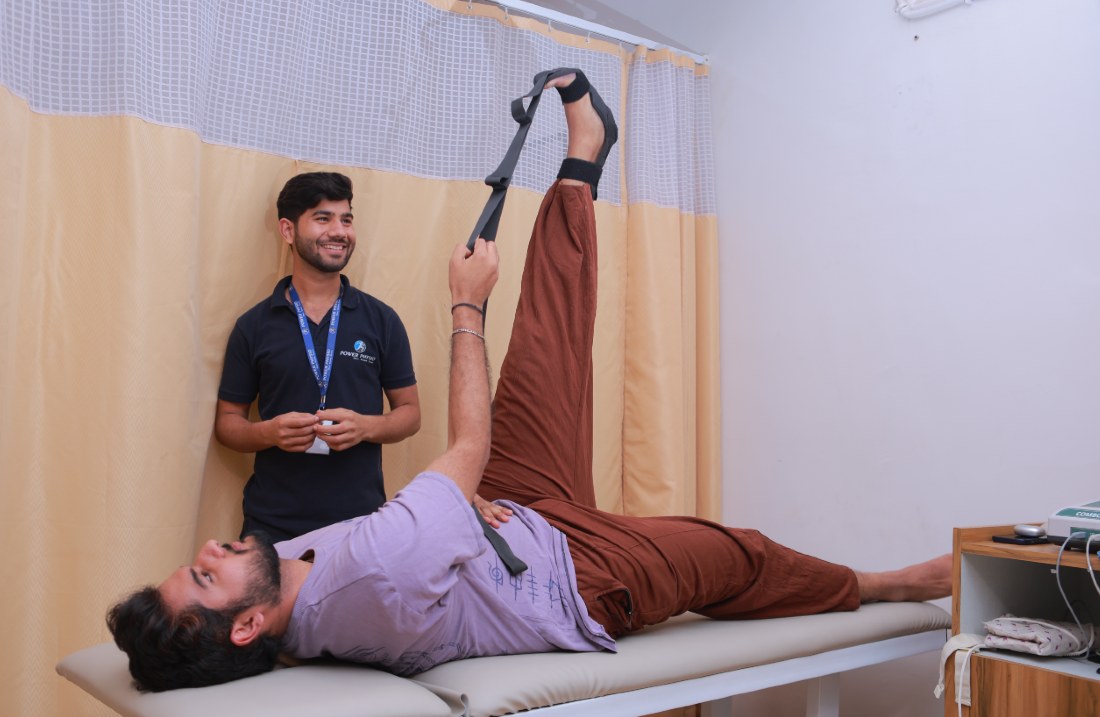
Ligament Tear
A ligament tear is not something you push through. Whether it happened during a match, at the gym, or simply from an awkward landing, the immediate pain, swelling and instability that follow are your body signalling that something significant has been damaged. What you do in the days and weeks after that moment determines how completely you recover. Ligament tear treatment in Noida at Power Physio Clinic is built around one objective: getting you back to full function safely, with a body that is stronger and better supported than it was before the injury. That requires an accurate diagnosis, a structured rehabilitation plan, and a physiotherapist who understands how ligament tissue heals and what it needs at every stage of the process.
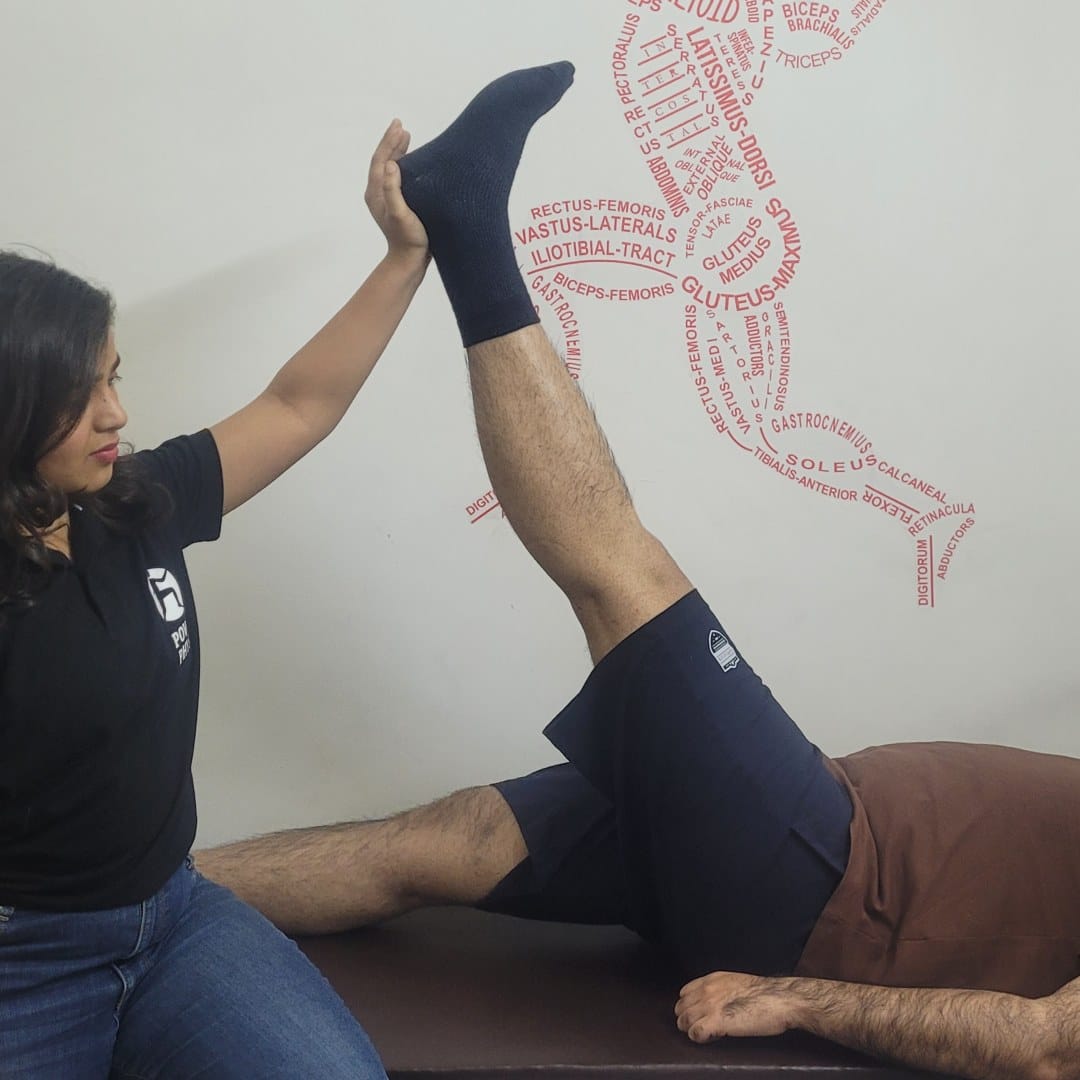
How Ligament Tear Happen
- Sudden Movement: Rapid or forceful movements
- Twisting force at end range of movement
- Fatigue
- Poor Flexibility
What Is a Ligament Tear?
Ligaments are tough, fibrous bands of connective tissue that connect bone to bone and provide stability to joints. When a joint is forced beyond its normal range of movement, the ligament can stretch, partially tear or rupture completely. The severity is graded as follows:
- Grade 1: Mild stretching with microscopic damage. The joint remains stable.
- Grade 2: Partial tear with some loss of joint stability. Moderate pain and swelling.
- Grade 3: Complete rupture of the ligament. Significant instability, often requiring surgical assessment.
Each grade requires a different treatment approach, which is why clinical assessment before starting any rehabilitation is essential.
Common Ligament Tears Treated at Power Physio
|
Ligament Tear |
Common Cause |
Primary Symptom |
Treatment Approach |
|
Knee Ligament Tear (ACL/MCL) |
Twisting, contact sport |
Instability, swelling |
Physiotherapy for knee ligament tear, possible surgery |
|
Ankle Ligament Tear |
Rolling the foot inward |
Swelling, instability |
Physiotherapy for ligament tear of ankle |
|
Shoulder Ligament Tear |
Fall, dislocation |
Instability, pain with movement |
Shoulder ligament tear treatment, strengthening |
|
Wrist Ligament Tear |
Fall on outstretched hand |
Pain with grip, swelling |
Wrist ligament tear treatment, joint stabilisation |
Symptoms You Should Not Ignore
Ligament tears present differently depending on the joint involved and the severity of the damage. These are the signs that require proper clinical assessment rather than rest and hope:
- A sudden pop or snap at the time of injury
- Immediate swelling around the affected joint
- Pain that is sharp during movement and persistent at rest
- A feeling that the joint is loose, giving way or unreliable
- Bruising that develops within hours of the injury
- Inability to bear weight through the affected limb
- Reduced range of movement that does not improve within 48 hours
Ligament Tear Treatment in Noida: The Right Approach
Effective ligament tear treatment in Noida follows a clear, phase-wise process. Skipping stages or returning to activity before the tissue is ready is the primary reason ligament injuries recur or fail to resolve fully.
1. Accurate Diagnosis and Assessment
Physiotherapy treatment for ligament tear begins with a thorough clinical examination of the affected joint, its stability, range of motion and surrounding muscle function. Where necessary, imaging is used to confirm the grade of tear and rule out associated fractures or cartilage damage. Treating a Grade 3 rupture the same way as a Grade 1 sprain produces poor outcomes.
2. Early Pain and Swelling Management
In the acute phase, the priority is protecting the injured ligament from further stress while managing pain and swelling. This involves appropriate offloading, manual lymphatic techniques, therapeutic modalities and guided early movement that promotes healing without aggravating the injury.
3. Joint Stabilisation and Manual Therapy
As the acute phase settles, hands-on joint mobilisation restores movement lost to pain and swelling. Soft tissue work addresses the compensatory tightness that develops in the muscles surrounding an injured joint. For physiotherapy for ankle ligament tear and physiotherapy for knee ligament tear, this stage is critical for restoring normal movement mechanics before strengthening begins.
4. Progressive Strengthening
Ligaments do not function in isolation. The muscles around the joint are the primary dynamic stabilisers, and rebuilding their strength is what allows the healing ligament to be progressively loaded without risk. This phase is graded carefully based on the tissue’s response, not a fixed timeline.
5. Proprioception and Stability Training
After a ligament tear, the joint’s ability to detect position and respond to sudden changes is significantly impaired. Proprioceptive training restores this and is the most important factor in preventing re-injury. This applies to every joint, but is particularly critical in physiotherapy for ligament tear of ankle and physiotherapy for knee ligament tear, where balance and reactive stability are essential for daily function and sport.
6. Return to Activity and Sport
Clearance to return to full activity is based on objective strength testing and functional movement criteria, not the number of weeks since the injury. This is what ensures the joint is genuinely ready, not just approximately ready. For competitive athletes, sport-specific loading is introduced progressively in this final phase.
Knee Ligament Tear Treatment
Knee ligament tears, particularly ACL and MCL injuries, are among the most significant joint injuries in sport. Physiotherapy for knee ligament tear is required both as a standalone treatment for Grade 1 and 2 injuries and as the essential rehabilitation component following surgical reconstruction for Grade 3 ruptures. The surgery restores the structural integrity of the joint. Physiotherapy is what restores the function.
Recovery from ACL reconstruction with structured physiotherapy for knee ligament tear takes nine to twelve months. Patients who commit fully to the rehabilitation programme return to sport with significantly lower re-injury rates than those who return early based on pain alone.
Shoulder and Wrist Ligament Tear Treatment
Shoulder ligament tear treatment addresses the instability that follows ligament damage caused by dislocation, contact injury, or repetitive overhead strain. The shoulder is the most mobile joint in the body and depends heavily on its ligamentous and muscular support system. Rehabilitation focuses on restoring rotator cuff and periscapular strength, as well as joint stability.
Wrist ligament tear treatment is common following falls on an outstretched hand. Wrist ligaments are small but critical to grip strength and forearm rotation. Without proper rehabilitation, wrist ligament injuries cause persistent pain, reduced grip and long-term joint instability that interferes with daily tasks and sport.
When Should You Seek Ligament Tear Treatment in Noida?
Do not delay if any of the following apply:
- The joint feels unstable or gives way during normal movement
- Swelling has not reduced significantly after 48 to 72 hours
- Pain is preventing you from bearing weight or using the joint normally
- The injury occurred during sport and involved a significant mechanism
- You have had the same joint injured more than once
- A previous ligament injury never felt fully right after recovery
Finding physiotherapy for ligament tear near me as early as possible following the injury produces significantly better outcomes than waiting for the pain to settle on its own.
How Power Physio Treats Ligament Tears in Noida
Led by Dr. Poonam Chaudhary (MPT Ortho), Power Physio Clinic provides evidence-based ligament tear treatment in Noida for patients of all activity levels. Our team conducts a thorough assessment before any treatment begins and builds a rehabilitation plan around your specific injury grade, your joint, your body and your goals.
We treat ligament tears across all major joints, including the knee, ankle, shoulder, and wrist, and work closely with orthopaedic surgeons in Noida when surgical assessment or post-operative rehabilitation is required.
We also treat related conditions including sports injuries, ankle pain, knee pain and overuse injuries that frequently present alongside ligament damage.
Call us on 70113 25292 or visit our contact page to book your ligament tear assessment at Power Physio today.
Conclusion
A ligament tear is a serious injury that deserves a serious treatment plan. Understanding the grade of the tear, following the correct rehabilitation phases and choosing the right ligament tear treatment in Noida makes the difference between a full recovery and a joint that never quite feels right again. Power Physio is where that recovery is done properly.